

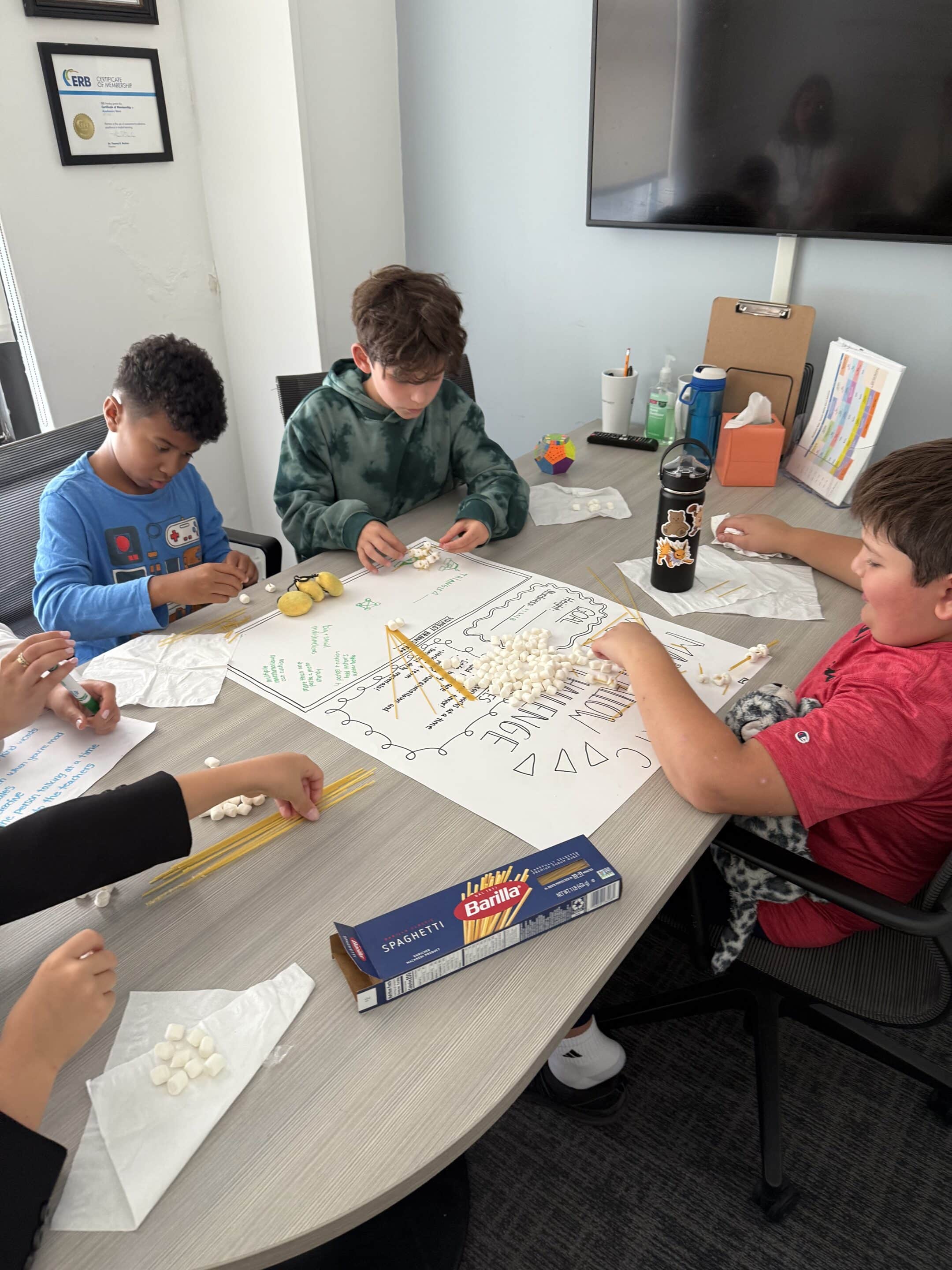
In decades past, schools focused on “the three R’s” – reading, writing, and arithmetic. But today, those R’s also include resilience, regulation, and reflection. In New York, a social-emotional learning curriculum includes these and many other concepts.
Social-emotional learning, also known as SEL, can help students improve their school performance. This is especially true for children with behavioral or learning difficulties.
This article explains what social-emotional learning is, why it matters, and how it can help students with learning differences. It also discusses how therapeutic schools in New York City are designed to promote social-emotional learning.
What is Social-Emotional Learning (SEL)?
According to the Collaborative for Academic, Social, and Emotional Learning (CASEL), social-emotional learning is “the process through which all young people and adults acquire and apply the knowledge, skills, and attitudes to develop healthy identities, manage emotions and achieve personal and collective goals, feel and show empathy for others, establish and maintain supportive relationships, and make responsible and caring decisions.” CASEL encourages SEL practices that focus on five key concepts:
- Self-awareness – This skill asks students to honestly assess and understand their emotions, as well as their strengths and weaknesses.
- Self-management – This objective focuses on teaching children to regulate their emotions, thoughts, and behaviors, by, for example, improving stress management, organization, or impulse control.
- Social awareness – This goal helps students learn to increase empathy towards others and engage in perspective-taking.
- Relationship skills – Students learn skills such as compromise, active listening, and mutual respect to help them build emotionally healthy relationships with others.
- Responsible decision-making – This tool helps students look at their own needs, as well as social factors and norms, to understand the potential benefits and consequences of major decisions.
The New York State Education Department strongly encourages all schools to include SEL in their curricula. So does the New York City Department of Education. However, at present, no law explicitly requires schools to do so.
Why SEL Matters
Numerous studies show the benefits of social-emotional learning for students. According to CASEL, SEL programs lead to higher grades, improved attendance, and better test scores than those in non-SEL schools. Better yet, research shows that these benefits can last through high school and even beyond.
In addition to helping individual students, SEL can benefit the entire school community and culture. SEL students have lower emotional distress and higher positivity towards themselves and others, and a stronger sense of safety and support. As a result, there are fewer discipline problems. For the same reasons, bullying is less likely.
How New York’s Therapeutic Schools Incorporate Social-Emotional Learning
While the State of New York and New York City encourage all schools to implement SEL principles, New York’s therapeutic schools are different. By design, therapeutic schools are better able to incorporate SEL policies.
For example:
- Staffing. In traditional schools, counselors are often overwhelmed. Currently, New York’s student-to-counselor ratio is 331:1. As such, it’s rare for counselors to have the opportunity to provide one-to-one SEL instruction or monitor student improvement. By contrast, in therapeutic schools, the ratios are exponentially lower, allowing for more intensive and personalized SEL sessions.
- Individualization. Generally, traditional schools offer SEL courses to entire classrooms. A student with an Individualized Education Plan (IEP) may be able to get targeted emotional support, but otherwise, it’s not an option. On the other hand, at a therapeutic school, all students can receive emotional services in smaller, individualized settings.
- Methods. Due to staffing and time constraints, most typical schools aren’t able to offer clinical interventions such as Cognitive Behavior Therapy (CBT). But because they have clinicians on staff, therapeutic schools can offer CBT, Dialectical Behavior Therapy (DBT), and many other options during the school day.
- Procedures. All schools are expected to have protocols for handling students in emotional crisis. However, with fewer staff, typical schools are not always able to deliver on time. Conversely, therapeutic schools have trained crisis teams and trauma-informed practices that allow for quicker de-escalation.
- Feedback. At traditional public or private schools, it’s rare for parents to receive individual feedback about their child beyond occasional report card comments. However, New York City’s therapeutic schools monitor students’ emotional progress every day. This gives parents more opportunities for feedback.
How SEL Helps Neurodivergent Students and Other Different Learners
SEL programs can help students with behavioral and learning challenges. Here are some examples:
- Attention Deficit Hyperactivity Disorder (ADHD). Many students with ADHD have trouble focusing. Individualized SEL supports can help them identify goals and make choices that align with them. Additionally, a supportive SEL culture can help ADHD students feel more accepted by their peers.
- Autism. SEL can be used to help autistic students with
skills like perspective-taking, emotional understanding, making conversation, and making friends. Tools such as video modeling can help students with autism learn to interpret emotional cues.
- Anxiety. Increased emotional awareness can help students engage in kinder self-talk. This reduces many types of anxiety, including test anxiety.
- Anger dysregulation. SEL programs can lower a school’s overall rate of aggression and anger. SEL can also help individual students learn to identify their triggers and use tools like deep breathing and body scans to calm themselves.
- Executive functioning. SEL can help these students learn to plan routines. Emotional regulation can also help these students learn to stay calm when stressed, which can help their working memory.
- Oppositional Defiant Disorder (ODD). SEL can help children with ODD improve their impulse control and problem-solving skills. It can also help them better recognize their emotions and repair relationships.
- Posttraumatic Stress Disorder (PTSD). Learning emotional regulation and steady routines can help these students better handle symptoms such as hyperarousal and avoidance.
- Specific Learning Disorders (e.g., dyslexia, dyscalculia, dysgraphia). While SEL doesn’t directly help with any of these disorders, it can give students the motivation and persistence they need to keep pushing when things get difficult.
Learn More About New York’s Therapeutic Schools
Every parent wants their child to excel academically. But increasingly, experts tell us that social-emotional learning is key to creating those academic outcomes. This is especially true for parents of children with learning disabilities, ADHD, autism, ODD, and other issues. Learning to manage their emotions can give these students the keys they need to unlock their potential.
If you are the parent of a non-typical learner, your child may thrive in a therapeutic school that gives them the tools they need to self-regulate. If you are looking for a therapeutic school in New York City, consider Academics West. Our team is well-versed in SEL practices, and we’re ready to help your child learn them. Take our virtual tour, then call 212-580-0080 to schedule an in-person visit.